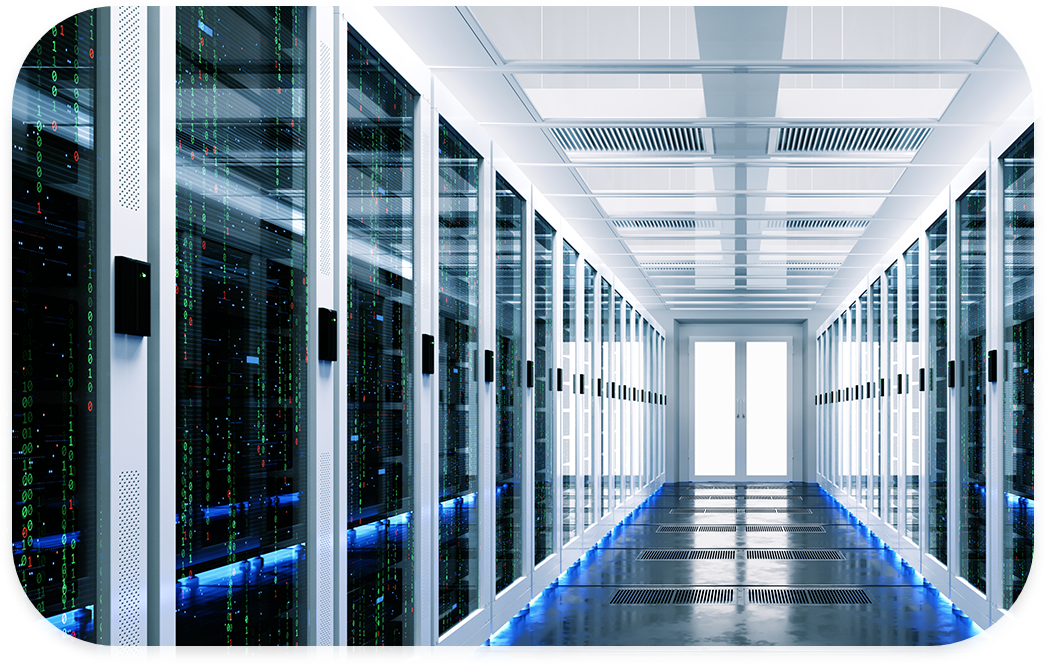
Data centers are the backbone of our digital world and they generate tremendous heat as they power AI, cloud computing, and large-scale networks. Keeping these facilities cool is critical to protect equipment, maintain performance, and avoid costly downtime. As data centers continue to expand in scale and complexity, demand for high-efficiency heat exchangers that deliver precise, dependable cooling has never been higher.

At Coilmaster, our data center cooling technologies are purpose-built to support sensitive technical equipment, keeping it at the right temperature to prevent overloads.

As computing requirements increase, data center cooling systems must manage higher and more concentrated heat loads. AI applications, high-performance computing, and greater rack densities can place additional demands on the systems responsible for moving heat away from servers and other IT equipment. Effective thermal management therefore requires careful consideration of cooling capacity, airflow, fluid temperatures, pressure drop, equipment footprint, and operating conditions.

Coilmaster works with customers to develop heat transfer solutions around specific system requirements. From fluid coils and fluid coolers to Coolant Distribution Units (CDUs) and oval tube technology, our products can support different approaches to data center thermal management and heat rejection.

How Does Data Center Cooling Work?

Data center cooling involves collecting the heat produced by servers, storage systems, networking hardware, and other electronic equipment and transferring that heat away from the IT environment. Ultimately, the heat must be rejected to another medium or to the outdoor environment.

The specific process depends on the facility’s cooling architecture and the types of systems selected. Common cooling technologies include air cooling, chilled water systems, liquid cooling, and hybrid configurations. The heated air passes through cooling equipment, where heat is transferred to chilled water, refrigerant, or another working fluid. That heat can then be transported through the system and rejected outdoors.

As computing requirements increase with rising workload demands, cooling systems must also be ready for future increases in heat concentration.

Air Cooling for Data Centers

Traditional air cooling remains an important part of thermal management in many facilities today. Air-based cooling commonly uses CRAC and CRAH units to circulate cold air through data centers. Traditional air cooling is often suitable for legacy data centers with lower-density racks and is generally effective for loads below 20 kW per rack.

Within an air-based system, fans move air through the equipment and across heat exchangers. The thermal performance of the coil is only one consideration. The resistance created as air passes through the coil also affects the amount of fan power required to maintain the necessary airflow.

For this reason, engineers must consider air-side pressure drop alongside heat transfer capacity. Coil geometry, fin configuration, airflow velocity, and other design variables can influence the overall performance of the system.

Liquid Cooling for Data Centers

As rack densities rise and heat density increases, many facilities are making the transition from traditional air cooling toward liquid cooling as an important part of data center design. As liquids can transport large amounts of heat, liquid-based systems can provide an effective method of removing concentrated heat from high-density computing environments.

Liquid cooling architectures vary, but they generally require equipment to circulate coolant, manage temperatures and flow rates, and transfer heat between cooling loops. Heat exchangers, fluid coolers, fluid coils, and CDUs can therefore play different roles within the broader thermal management system. In practice, this can include direct liquid cooling at the chip level as well as immersion cooling, where IT components are submerged in dielectric fluids.

Data Center Cooling Challenges

Data center cooling equipment must operate within demanding thermal, hydraulic, airflow, and space requirements. Understanding these factors early in the design process can help engineers select heat transfer equipment suited to the intended operating conditions.

Increasing Heat Loads

High-density workloads and changing workload demands can increase the amount of heat that must be removed from a given area. Cooling systems must be designed around expected thermal loads and adapt as thermal conditions change over time, including during part-load operation. 

This places greater importance on accurately selecting and configuring heat exchangers. Capacity must be balanced with airflow, fluid flow, pressure drop, footprint, and other system requirements.

Cooling Energy Consumption

Moving air through a data center cooling system requires energy. Every component that creates airflow resistance contributes to the static pressure that fans must overcome. Heat exchanger coils can be a significant source of internal air resistance in an air handling system.

Reducing unnecessary air-side pressure drop can therefore help decrease fan requirements while maintaining the airflow needed for heat transfer. Coilmaster’s oval tube technology is designed specifically to reduce air-side pressure drop and improve the relationship between thermal performance and fan energy.

Space Constraints

Mechanical space is another consideration. Designers may need to achieve significant heat rejection or cooling capacity without unnecessarily increasing the equipment footprint. Equipment configuration, airflow orientation, coil geometry, fan arrangement, and circuiting can all affect how effectively a solution fits within available space.

Reliability and Continuous Operation

Cooling is an essential part of maintaining appropriate operating conditions for data center equipment. Heat transfer components must therefore be selected with the expected operating environment in mind. Materials, fluid conditions, airflow, temperatures, pressures, and maintenance requirements should all be evaluated as part of equipment selection.

Coolant Distribution Units for Data Centers

As liquid cooling becomes increasingly relevant to high-density computing, CDUs provide an important connection between IT cooling equipment and the broader facility cooling infrastructure. A CDU manages coolant circulation within a liquid cooling system and can provide heat exchange between the technology cooling loop and the facility water system. This separation allows cooling fluid serving sensitive IT equipment to be managed independently from the facility-side loop.

Depending on the system design, a CDU can help control coolant temperatures, pressures, and flow rates while transferring heat between loops. This makes the CDU an important component when developing controlled liquid cooling architectures for high-density applications. In high-density liquid-cooling deployments, rear-door heat exchangers can capture hot air immediately as exhaust air exits servers.

Coilmaster’s CDUs are purpose-built for modern data centers, providing precise liquid-cooling control and integration with advanced heat exchange systems. CDUs can support the evolving thermal management requirements associated with AI, high-performance computing, and other applications that generate concentrated heat loads.

By combining coolant distribution with Coilmaster’s broader heat transfer engineering capabilities, customers can support modern data center operations with an end-to-end liquid cooling approach to thermal management.

Why Coilmaster
for Data Centers?

Coilmaster understands the mission-critical nature of data center cooling. Our advanced heat exchanger and fluid cooler solutions are engineered to handle high thermal loads while maintaining consistent, energy-efficient performance.

Proven reliability

Our coils are designed and tested to perform under the most demanding conditions, helping ensure uninterrupted data center operation.

Fast, dependable delivery

With advanced manufacturing capabilities, guaranteed 15-day lead times, and the speed needed for time-sensitive deployment, we help you meet tight project schedules without sacrificing quality.

Custom configurations

We offer fully custom heat transfer systems to meet your specific airflow, capacity, and footprint requirements.

U.S.-based support

Our nationwide footprint and dedicated engineering teams mean you get responsive service from experts, offering support from initial design through installation and future equipment replacements.


Commitment to innovation

Continuous investment in R&D and proprietary software helps us deliver next generation thermal solutions optimized for changing data center demands. 

Featured Products for
Data Centers

Oval Tube Technology

Our revolutionary oval tube technology dramatically reduces air-side pressure drop, allowing a smaller fan motor to achieve the same cooling capacity – resulting in a significant reduction in energy usage and costs.

view details

Fluid Coolers

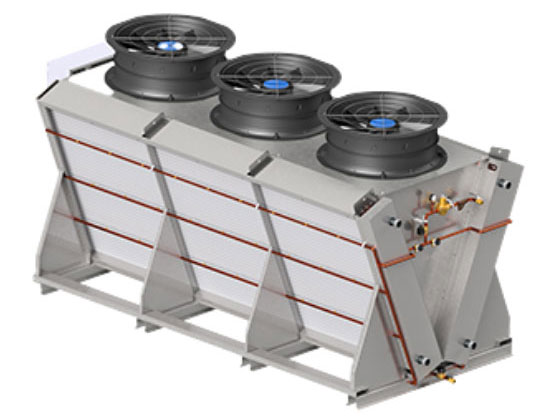
Available in dry or adiabatic configurations with integrated controls and multiple fan options, our fluid cooler and remote condenser lines deliver flexible, high-performance solutions for process cooling, data centers, supermarkets, industrial facilities, and more.

view details

Fluid Coils

Coilmaster fluid coils are designed for air cooling or heating applications using chilled water, hot water or brine (e.g., ethylene or propylene glycol mixtures).

view details

Selecting Heat Transfer Equipment for a Data Center

No single approach fits every facility, because several cooling technologies may be appropriate depending on design goals and operations. Equipment selection should begin with the actual operating conditions and requirements of the facility. Several variables can influence heat exchanger and fluid cooler selection.

Cooling Capacity

The required heat transfer capacity is a fundamental starting point. Engineers must determine the expected load and understand how that load may vary as IT utilization changes. Equipment should be selected for the anticipated operating range rather than evaluated only at one theoretical condition.

Airflow and Air-Side Pressure Drop

For systems that rely on airflow, engineers must consider how much air must pass through the heat exchanger and how much resistance the coil introduces. Preventing cold air mixing is a key part of airflow management in data center environments, and one of the steps facilities should be taking to improve cooling performance.
Excessive pressure drop can increase fan requirements and affect system energy consumption.

Fluid Type, Temperature, and Flow Rate

The characteristics of the cooling fluid directly affect heat exchanger performance. Water and glycol mixtures have different properties, and the concentration of glycol can influence both thermal performance and pressure drop. Entering and leaving fluid temperatures and the required flow rate must therefore be included in coil selection.

Fluid Pressure Drop

The cooling system must also move fluid through piping, valves, heat exchangers, and other components. Coil circuiting and tube selection influence the pressure that pumps must overcome. Designing for reasonable fluid pressure drop can help support effective system operation.

Equipment Footprint

Space limitations can influence coil dimensions, fluid cooler layout, airflow orientation, and fan configuration. Custom engineering can be valuable where cooling requirements must be accommodated within a specific mechanical footprint.

Ambient Conditions

Outdoor heat rejection equipment must be selected according to site conditions. Design temperatures, climate, fluid requirements, and potential freeze conditions can influence fluid cooler configuration and the use of water/glycol mixtures.

System Integration

Cooling components do not operate independently. Heat exchangers, fans, pumps, controls, CDUs, and heat rejection equipment must function as parts of the larger cooling architecture. Evaluating equipment within that system context can help identify configurations that appropriately balance capacity, airflow, pressure drop, and control requirements.

Custom Data Center Cooling Engineering and Testing

Data center cooling projects frequently involve operating conditions that cannot be addressed effectively with a one-size-fits-all heat exchanger. Coilmaster provides engineering resources that allow customers to evaluate and refine coil designs around their specific requirements.

Engineering collaboration can include coil selection, custom circuiting, pressure-drop evaluation, airflow analysis, and configuration around dimensional or installation constraints. Coilmaster’s proprietary software and testing capabilities provide additional resources for evaluating heat exchanger performance before equipment enters service.

Ez Coil® Selection Software

Ez Coil® is Coilmaster’s proprietary coil selection software. Engineers and project teams can use the platform to evaluate coil performance across a range of operating conditions and generate performance data, pricing, and drawings.

The software also allows users to customize designs, configure circuiting, and select among fin designs. This gives project teams greater flexibility when comparing potential heat exchanger configurations against their system requirements.

VirtuaLab® Simulation

VirtuaLab® provides another level of design analysis by allowing different heat exchanger configurations to be simulated before production. Its tube-by-tube modeling capabilities can evaluate detailed circuiting and different airflow distributions, including conditions in which airflow across a coil face is not uniform.

This is relevant because installed heat exchangers do not always experience perfectly uniform airflow. Modeling different velocity profiles can provide additional insight into how a design may perform under realistic operating conditions.

Real-World Heat Exchanger Testing

Coilmaster also operates an on-site test lab with a 20-ton psychrometric chamber. The chamber can simulate a broad range of airflow, temperature, humidity, and fluid conditions, giving engineers an opportunity to evaluate coil behavior under controlled conditions.

Testing and simulation can be used together to refine designs, validate selections, and build a more complete understanding of heat exchanger performance. For data center cooling applications, where thermal performance and pressure drop can have broader system implications, these engineering capabilities provide valuable information during equipment development and selection.

Build a Data Center Cooling Solution Around Your Requirements

As data centers evolve to support AI, cloud infrastructure, high-performance computing, and increasingly dense IT environments, cooling equipment must evolve with them. Effective thermal management requires more than selecting equipment according to nominal capacity. Airflow, pressure drop, fluid conditions, heat rejection, controls, footprint, and system integration all contribute to cooling performance.

Coilmaster combines custom heat exchanger engineering, U.S.-based manufacturing, proprietary selection and simulation software, laboratory testing, fluid coolers, fluid coils, oval tube technology, and CDUs to support a range of data center cooling requirements and cooling technologies.

Whether you are designing a new cooling system, expanding an existing facility, evaluating liquid cooling, or addressing a specific heat transfer requirement, Coilmaster can help identify a solution around your operating conditions.

Request a Quote

Contact Coilmaster to discuss your data center cooling requirements and determine the heat transfer equipment and configuration appropriate for your application.