
Evaporator Coils’ Role in Cooling Systems
Evaporator coils are a critical component in air conditioning and refrigeration systems, responsible for absorbing heat from the air or product being cooled. As warm air passes over the evaporator coil, heat transfers from the air into the refrigerant, lowering the air temperature before it is recirculated through the space.
Understanding how does evaporator work within the HVAC and refrigeration cycle is essential for system performance, comfort, and energy efficiency. Whether in a residential air conditioner, a commercial air handler, or an industrial freezer, the evaporator coil plays a direct role in cooling capacity, humidity control, and overall system reliability.
The Refrigeration Cycle Overview
To understand how an evaporator coil functions, it helps to look at the full refrigeration cycle. Cooling systems rely on a continuous loop that moves heat from one location to another rather than creating cold directly.
The cycle begins at the compressor, where refrigerant vapor is compressed to a high pressure and temperature. From there, the refrigerant moves to the condenser, where heat is rejected to the surrounding air or water, and the refrigerant condenses into a liquid. The liquid refrigerant then passes through an expansion device, which reduces pressure and temperature before it enters the evaporator coil.
Inside the evaporator coil, the low-pressure refrigerant absorbs heat and evaporates back into a vapor. This vapor returns to the compressor to repeat the cycle. The evaporator coil is the point where useful cooling occurs, making it a central component in both comfort cooling and refrigeration systems.
How Evaporator Coils Function
An evaporator coil functions by allowing low-pressure refrigerant to absorb heat from the surrounding air. As air flows across the surface of the evaporator coil, heat transfers into the refrigerant inside the tubes. This heat causes the refrigerant to change phase from a liquid to a vapor.
The efficiency of an evaporator coil depends on several factors. Surface area plays a major role, which is why fins are attached to the coil tubes. Increased surface area allows more contact between air and metal, improving heat transfer. Fin density affects how much air can pass through the evaporator coil while still providing sufficient heat absorption.
Airflow is also critical, as too little airflow reduces heat transfer and can cause icing on the evaporator coil. Too much airflow may reduce contact time and lower cooling effectiveness. Proper refrigerant distribution ensures the entire evaporator coil is active, preventing hot spots or uneven cooling. An AC evaporator coil must be carefully designed to balance airflow, surface area, and refrigerant flow for reliable operation.
Different Evaporator Coil Designs
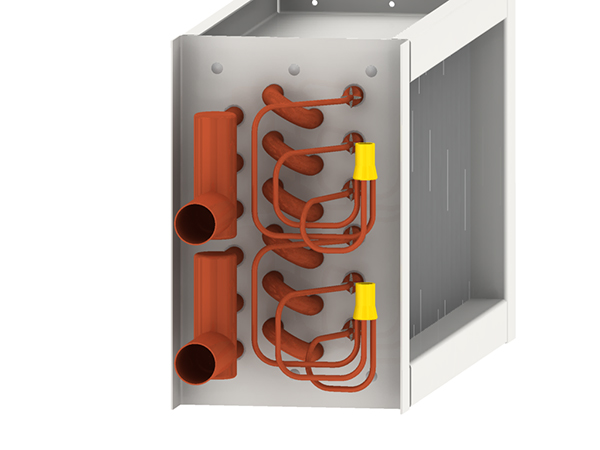
Evaporator coil design varies based on application, capacity, and system configuration. Drawn tube evaporator coil designs are common in HVAC and refrigeration systems due to their durability and flexibility. These coils allow for custom tube spacing, fin patterns, and circuiting.
Microchannel evaporator coil designs offer a compact alternative with reduced refrigerant charge and improved heat transfer in certain applications. However, they may be more sensitive to fouling and service conditions.
Evaporator coil performance is also influenced by the type of metering device used. Systems may use a thermostatic expansion valve or a fixed orifice to control refrigerant flow into the evaporator coil. Custom evaporator coil configurations are often required for specialized equipment, space constraints, or demanding operating environments.
Applications & System Types
Evaporator coils are used across a wide range of cooling and refrigeration systems. In residential systems, an AC evaporator coil is typically located inside the air handler or furnace cabinet. In commercial systems, evaporator coil designs are found in air handling units, rooftop equipment, and self-contained systems.
In refrigeration applications, evaporator coil installations are common in walk-in coolers, freezers, and food service equipment. Industrial facilities rely on evaporator coil performance to maintain process temperatures and protect sensitive products. Regardless of system type, the evaporator coil must be matched to airflow, load, and refrigerant requirements to deliver consistent cooling.
Benefits of Effective Evaporator Coils
A properly designed evaporator coil improves overall cooling performance and system efficiency. When an evaporator coil is properly sized and matched to airflow and refrigerant conditions, the system operates more efficiently and predictably. In both comfort cooling and refrigeration applications, evaporator coil performance plays a major role in long-term operating cost and reliability.
The main benefits of a well-designed evaporator coil include:
- Improved heat absorption for stronger cooling performance
- Lower energy consumption through stable compressor operation
- Better humidity control as moisture condenses on the coil surface
- More consistent indoor temperatures with fewer swings
- Reduced mechanical strain on system components
Common Issues & Maintenance Tips
There are many common performance issues that evaporator coils experience if regular maintenance is not done for airflow, refrigerant charge, and cleanliness. Keeping with correct maintenance for evaporator coils will ensure a consistent and seamless cooling performance.
Here are some of the common issues you can have with evaporator coils:
- Frost or ice buildup that can lead to poor airflow
- Dirty coil surfaces can reduce cooling
- Improper refrigerant charge, which can lead to uneven temperature distribution
- Corrosion or leaks that can impact overall evaporator coil performance
These are a few tips on how you can properly maintain evaporator coils:
- Keep air filters clean to protect the coil itself
- Clean the coil surface so heat transfer stays efficient
- Verify refrigerant charge and system balance
- Inspect drain pans and condensate lines for proper drainage
Get Guidance on Evaporator Coils with Coilmaster
Evaporator coil performance is central to efficient cooling, moisture control, and long-term system reliability. Whether used in comfort cooling, refrigeration, or industrial applications, proper coil design and integration directly affect overall system performance. Coilmaster designs and manufactures custom evaporator coil solutions built to match specific airflow, refrigerant, and operating requirements. Contact us to request a quote or speak with our engineering team about selecting the right evaporator coil for your application.