
Cooling technology plays a central part in modern HVAC, industrial processing, and high-density computing environments. As facilities face tighter efficiency expectations, water-use restrictions, and reliability demands, many engineers and facility managers look for a clear understanding of fluid coolers and how they compare to other cooling options.
A fluid cooler is a closed-loop, air-cooled heat exchanger designed to remove heat from a circulating liquid, typically water or a water-glycol solution. Instead of relying on evaporation, a fluid cooler transfers heat directly from the process fluid to ambient air. This dry-cooling approach supports reliable temperature control while avoiding many operational challenges associated with evaporative systems like cooling towers.
How a Fluid Cooler Works
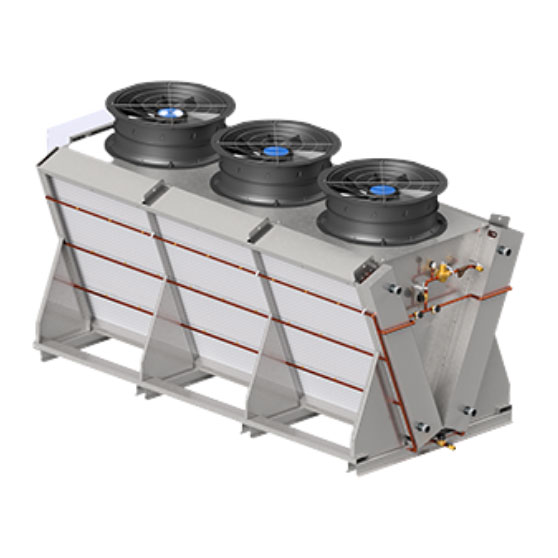
To fully grasp the science behind fluid coolers, it helps to look at how heat transfer occurs inside the system. Warm process fluid enters the fluid cooler and flows through tubes within a finned coil. Axial fans pull ambient air across the coil surface, allowing heat to move from the fluid to the air. The cooled fluid then returns to the system to absorb more heat.
Unlike a cooling tower, which cools water through evaporation, a fluid cooler operates without water loss. This makes fluid coolers a form of dry cooling, often referred to as dry fluid coolers in industrial specifications.
Closed-loop systems reduce contamination risks and simplify maintenance compared to open evaporative designs. Fluid coolers can also support free cooling strategies; during cooler outdoor conditions, systems may reject heat without mechanical refrigeration, reducing energy use and operating costs.
Components & Typical Design
Learning more about fluid cooler components reveals why these systems perform reliably across applications. A typical fluid cooler includes:
- Finned coils, consisting of tubes and fins that promote efficient heat transfer
- Axial fan motors that move ambient air across the coil surface
- Weather-resistant casing designed for outdoor installation
- Closed-loop piping connections that isolate the process fluid
- Fluid inlet and outlet headers for balanced flow distribution
- Optional protective coatings for corrosion resistance in harsh environments
Each fluid cooler functions as a specialized heat exchanger, with coil geometry, fin density, and airflow design influencing overall performance. Improvements in fan motor efficiency and coil construction have increased fluid cooler efficiency, particularly in variable-load applications.
Industry research shows that modern designs can reduce energy consumption while lengthening service life, especially when compared to older cooling tower installations that require constant water treatment.
Benefits vs. Traditional Cooling Towers
Many facilities evaluate fluid coolers as an alternative to traditional cooling tower systems. A cooling tower removes heat by evaporating a portion of circulating water, which requires continuous makeup water, chemical treatment, and basin maintenance. Over time, these requirements increase operating costs and system complexity.
A fluid cooler avoids these challenges altogether by operating as a closed-loop system. Because fluid coolers don’t rely on evaporation, they eliminate water consumption and reduce maintenance demands. This difference becomes especially valuable in regions with water-use restrictions or strict environmental regulations.
Facilities operating multiple cooling tower systems often face issues related to scale buildup, biological growth, and seasonal operation. Alternatively, fluid coolers simplify operation by removing basins, drift eliminators, and water treatment programs. This makes fluid coolers ideal for retrofit projects where existing cooling tower infrastructure has become costly or unreliable.
Some large facilities combine fluid coolers with cooling tower equipment to handle peak loads. In these hybrid systems, draft cooling towers may supplement dry cooling during extreme conditions. Even so, many operators now favor standalone fluid coolers to lower lifecycle costs and operational risk.
Performance Considerations & When They Work Best
Several factors impact how well a fluid cooler performs in real-world conditions:
- Ambient air temperature, which sets the limit for heat rejection
- Required process fluid temperature, especially in tight control applications
- Fluid type, such as water versus glycol mixtures
- Airflow capacity, influenced by fan selection and control strategies
- Seasonal performance, including freeze protection in colder climates
Fluid coolers perform particularly well in environments where ambient air temperatures support year-round dry cooling. In colder regions, they can operate efficiently for much of the year without assistance from mechanical refrigeration. And compared to cooling towers, fluid coolers offer more predictable performance with fewer seasonal adjustments, simplifying facility planning and maintenance scheduling.
Applications & Industries for Fluid Coolers
The applications of fluid coolers are seen across a range of industries, all of which depend on stable thermal management and reliable operation. Common uses include:
- HVAC chilled water systems
- Manufacturing process cooling
- Refrigeration system upgrades
- Industrial cooling loops
- Liquid cooling for electronics and data centers
In data centers, liquid cooling strategies increasingly replace or supplement traditional cooling tower designs. High-density computing environments generate heat loads that challenge air-only cooling methods. Fluid coolers support liquid cooling loops that deliver consistent thermal control while reducing water use and operational complexity.
Industrial facilities also adopt fluid coolers to modernize legacy systems previously connected to a cooling tower. Retrofitting with fluid coolers reduces downtime, lowers maintenance costs, and improves overall system reliability without sacrificing performance.
Why Choose Coilmaster Fluid Coolers
When weighing the pros and cons of different fluid cooler suppliers, experience and engineering support matter just as much as (if not more than) equipment specifications. Coilmaster designs and manufactures custom fluid cooler solutions for HVAC, industrial, and mission-critical applications.
Key advantages of working with Coilmaster:
- U.S.-based manufacturing with consistent quality control
- Custom configurations tailored to fluid type, flow rate, and temperature range
- Engineering support backed by proprietary EZ-Coil selection software
- Proven performance in demanding HVAC and data center environments
Plus, Coilmaster’s vertically integrated manufacturing process and nationwide engineering support allow customers to shorten lead times while lowering supply chain risk.
Request a Quote or Consultation
Selecting the right fluid cooler starts with proper sizing and application review. Coilmaster’s engineering team supports specification checks, performance modeling, and fast quoting to help customers move from design to installation with confidence. Contact Coilmaster today to discuss your application or request a technical consultation.