
What Coil Configuration Means
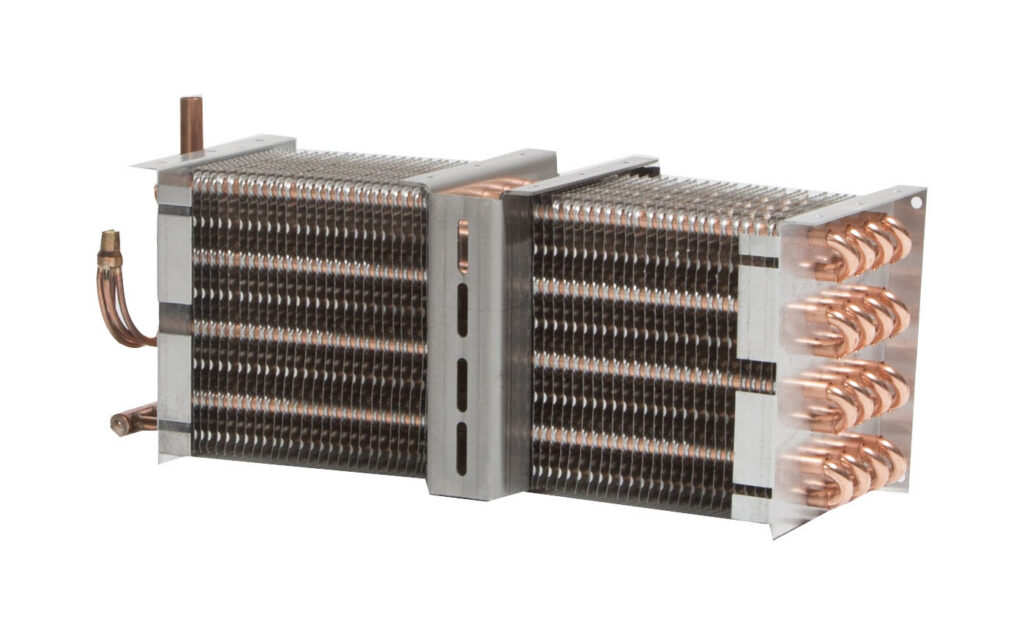
Coil configuration refers to the physical design and arrangement of a heat transfer coil, including how tubes, fins, and circuits are structured to meet specific performance requirements. In HVAC and industrial systems, coil configuration plays a direct role in how efficiently heat is transferred between air and fluid, impacting system capacity, airflow, and overall reliability.
A properly configured coil ensures that air moves evenly across the surface while the internal fluid distributes heat effectively. Whether using a single coil or a more complex dual coil configuration, the design directly affects system performance. For engineers and contractors, understanding coil configuration is essential when selecting equipment that meets both performance and installation requirements.
Key Elements of Coil Configuration
Several design variables define how a coil performs in real-world conditions. These elements must be balanced to achieve the desired combination of capacity, airflow, and durability.
Number of rows.
This refers to how many layers of tubes the air passes through. More rows increase heat transfer surface area and capacity, but can also increase air resistance. Systems with higher loads may require additional rows to achieve the target performance.
Fin spacing.
This affects airflow and maintenance. Tighter fin spacing increases surface area and heat transfer but may also increase pressure drop. Wider spacing improves airflow and is often used in environments where dirt or debris is a concern.
Tube diameter and layout.
These influence how fluid flows through the coil and how effectively heat is transferred. Tube arrangement also impacts how evenly air interacts with the coil surface.
Circuiting design.
This determines how fluid moves through the coil. Proper circuiting ensures even distribution and consistent performance across the entire coil.
Materials.
Copper tubes and aluminum fins are commonly used for their thermal conductivity. In more demanding environments, coatings or alternative materials may be applied to extend coil life.
These elements are often adjusted in both standard and custom coils to meet specific application requirements.
How Configuration Impacts Performance
Coil configuration directly affects airflow, pressure drop, and heat transfer efficiency. These factors determine how well the system performs under both design and real-world conditions.
Airflow must be evenly distributed across the coil to maximize performance. In a dual coil configuration, airflow may be staged or split between two coils to improve system control and efficiency. If airflow is uneven or restricted, portions of the coil may not be fully utilized.
Pressure drop is created as air moves through the coil. Higher pressure drop increases fan energy requirements, which can raise operating costs. Proper coil configuration balances heat transfer performance with acceptable airflow resistance.
Heat transfer efficiency depends on surface area and how effectively that surface is used. Increasing rows or fin density can improve performance, but only if airflow and fluid distribution are properly managed. A well-designed coil configuration ensures that both airside and fluid-side performance are optimized.
Common Types of Coil Configurations
Different HVAC applications require different coil configurations based on how heat is absorbed or rejected within the system. The different types of coil configurations we can assist with at Coilmaster include:
- Fluid coils are used in systems that circulate water or glycol to transfer heat. These coils are often configured for stable temperature control and efficient fluid flow in air handling and process systems.
- Evaporator coils are designed to absorb heat from the air as refrigerant evaporates. These are commonly used in air conditioning systems, where maintaining airflow and moisture removal is critical.
- Condenser coils are used to reject heat from the refrigerant to air or water. These coils are typically configured to handle higher temperatures and operate efficiently in outdoor or high-load environments.
In some systems, a single coil may be sufficient, while others may require a dual coil configuration to meet performance or redundancy requirements.
Custom vs. Standard Configurations
Standard coil configurations are designed for common applications and predictable operating conditions. These configurations offer reliable performance for systems with typical airflow, load, and environmental requirements.
However, many systems require a more tailored approach. Custom coils allow engineers to adjust design variables such as row count, fin spacing, circuiting, and materials to match specific conditions. This is especially important in systems with unique airflow patterns, space limitations, or demanding environments.
Custom engineering can improve efficiency, reduce energy consumption, and extend equipment life by ensuring the coil configuration is optimized for the application. In more complex systems, custom coils often provide better long-term performance compared to standard designs.
Coilmaster specializes in designing both standard and custom coils to meet a wide range of HVAC and industrial requirements.
Selecting the Right Configuration
Selecting the right coil configuration requires evaluating several system and environmental factors.
System type is one of the most important considerations. Air conditioning, heating, and process cooling systems each have different performance requirements that influence coil design.
Environmental conditions also play a role. High humidity, corrosive air, or exposure to debris may require adjustments to fin spacing or material selection.
Load requirements determine how much heat must be transferred. Systems with higher loads may require additional rows or a dual coil configuration to meet capacity needs while maintaining efficiency.
Space constraints and installation requirements should also be considered. In some cases, a single coil may be the most practical solution, while in others, multiple or custom coils may be required to meet performance goals. Balancing these factors helps ensure the selected coil configuration delivers reliable and efficient operation.
Get Expert Coil Configuration
Coil configuration directly affects system performance, efficiency, and long-term reliability. Selecting the right design requires a clear understanding of airflow, load conditions, and the operating environment.
Coilmaster engineers work with customers to develop both standard and custom coils tailored to specific applications. Whether you need a single coil solution or a more advanced dual coil configuration, our team can help optimize performance for your system. Contact Coilmaster to discuss your application and get expert guidance on selecting the right coil configuration.