
Condenser coils work by transferring heat from hot, high-pressure refrigerant to the surrounding air, allowing the refrigerant to change from vapor into liquid. This process is an essential part of commercial HVAC and refrigeration systems, where heat must be removed continuously to maintain the desired cooling conditions.
The ability of a condenser coil to reject heat affects cooling capacity, compressor operation, and overall system efficiency. Understanding how condenser coils work can help equipment manufacturers and engineers make better decisions about coil design, operating conditions, and equipment performance.
How Does a Condenser Coil Work in the Refrigeration Cycle?
The condenser receives hot, high-pressure refrigerant vapor from the compressor. As refrigerant travels through the coil, heat moves through the tube walls and into the surrounding air. Fans carry that heat away, allowing the refrigerant to cool and eventually change into liquid.
This process generally occurs in three stages:
- Desuperheating: Hot refrigerant vapor releases sensible heat until it approaches the saturation temperature associated with its pressure.
- Condensation: Refrigerant continues releasing heat as it changes from vapor to liquid. During this stage, its temperature remains relatively constant as long as pressure stays stable.
- Subcooling: Once condensation is complete, additional heat removal lowers the liquid refrigerant temperature below its saturation point.
The liquid refrigerant then moves toward the expansion device, where its pressure decreases before entering the evaporator. The cycle continues as the refrigerant absorbs heat and eventually returns to the compressor. The primary condenser coil function is to reject heat efficiently so the refrigeration system can continue operating as intended.
How Do Condenser Coil Components Transfer Heat?
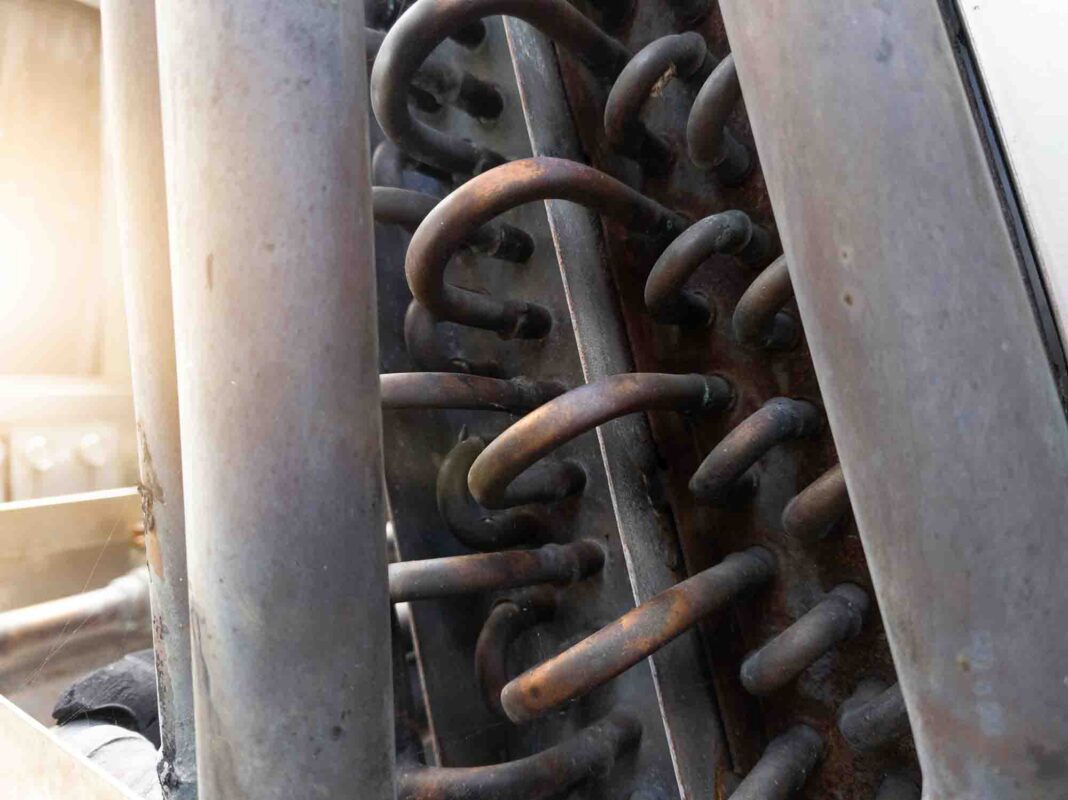
Most conventional air-cooled condenser coils use a combination of refrigerant tubes and fins to transfer heat. Refrigerant flows through the tubes, while fins provide additional surface area for heat to move into the surrounding air.
Copper tubing and aluminum fins are commonly used because of their heat-transfer properties. Headers and refrigerant circuits help distribute refrigerant throughout the coil, allowing the available surface area to contribute to heat rejection.
Airflow is equally important. Fans move air across the finned surfaces, carrying heat away as refrigerant travels through the coil. These components work together to support consistent heat transfer. Their arrangement also affects how effectively the condenser fits and operates within the larger HVAC/R system.
What Happens When a Condenser Coil Cannot Reject Enough Heat?
When a condenser coil cannot release heat effectively, refrigerant may remain at a higher condensing temperature and pressure. This forces the compressor to work against greater pressure, potentially increasing energy consumption and reducing cooling performance.
Several conditions can interfere with heat rejection:
- High ambient temperatures that reduce the temperature difference between refrigerant and surrounding air
- Dirt and debris that accumulate on coil surfaces and restrict airflow
- Damaged fins or corrosion that interfere with heat transfer
- Improper refrigerant conditions that affect system operation
If these problems continue, equipment may experience reduced capacity, higher operating costs, or protective shutdowns. Declining performance does not always mean the condenser coil needs replacement. Airflow restrictions, refrigerant conditions, and other system components should also be evaluated to identify the underlying problem.
How Does Airflow Affect Condenser Coil Operation?
Airflow plays a major role in how condenser coils work because it removes heat from the coil surfaces. Without sufficient airflow, heat can accumulate around the condenser, reducing its ability to cool and condense refrigerant.
Even airflow distribution is important. When some areas receive less air than others, portions of the coil may contribute less to overall heat rejection. Increasing airflow is not always the best solution, however. Higher fan speeds can increase energy consumption and noise, while equipment dimensions may limit available airflow.
For commercial HVAC/R manufacturers, condenser performance depends on matching coil requirements with the available fan capacity and equipment layout. This helps maintain effective heat rejection without creating unnecessary operating demands.
Where Are Condenser Coils Used in Commercial HVAC/R Systems?
Condenser coils are used in equipment that relies on refrigerant to move heat from one location to another. Their design and operating requirements vary depending on the application.
Common applications include:
- Commercial HVAC equipment: Rooftop units and packaged air conditioning systems use condenser coils to reject heat removed from conditioned spaces.
- Supermarket refrigeration: Refrigeration systems serving display cases, walk-in coolers, and refrigerated storage depend on reliable condenser operation to maintain required temperatures.
- Industrial refrigeration: Process cooling and specialized refrigeration equipment may require coils designed for demanding conditions or limited installation space.
- Data center cooling: Refrigerant-based cooling equipment may use condenser coils to reject heat generated during cooling operations.
Although condenser coils can support certain data center cooling systems, they serve a different purpose from the liquid-to-liquid heat exchangers commonly used in coolant distribution units (CDUs). Understanding these differences helps engineers select appropriate heat transfer equipment for each application.
Why Is Proper Condenser Coil Engineering Important?
Effective condenser coil operation starts with selecting a design that matches the system’s heat rejection requirements. A coil must provide sufficient capacity while accommodating the available airflow, refrigerant conditions, and equipment dimensions.
Tube arrangements, refrigerant circuiting, and coil construction all influence how heat moves through the condenser. These factors also affect how easily the coil can be integrated into commercial HVAC/R equipment.
For OEM manufacturers, custom engineering can help address space restrictions, connection requirements, and application-specific performance needs. A properly designed condenser coil should meet these requirements without creating excessive operating pressures or unnecessary equipment demands.
The same considerations apply when evaluating replacement coils. Matching physical dimensions is important, but refrigerant compatibility, capacity, and airflow requirements must also be considered.
Find the Right Condenser Coil for Your HVAC/R Application
Understanding how condenser coils work helps explain why proper heat rejection, airflow, and coil design are essential to reliable HVAC/R performance. Whether you’re developing new equipment or addressing an existing cooling challenge, selecting the right condenser coil can make a meaningful difference.
Our team works with HVAC/R manufacturers to develop custom condenser coils that meet specific performance, dimensional, and application requirements. Contact us and send your specifications or drawings. Our engineering team can help you evaluate your requirements and find the right solution for your application.