

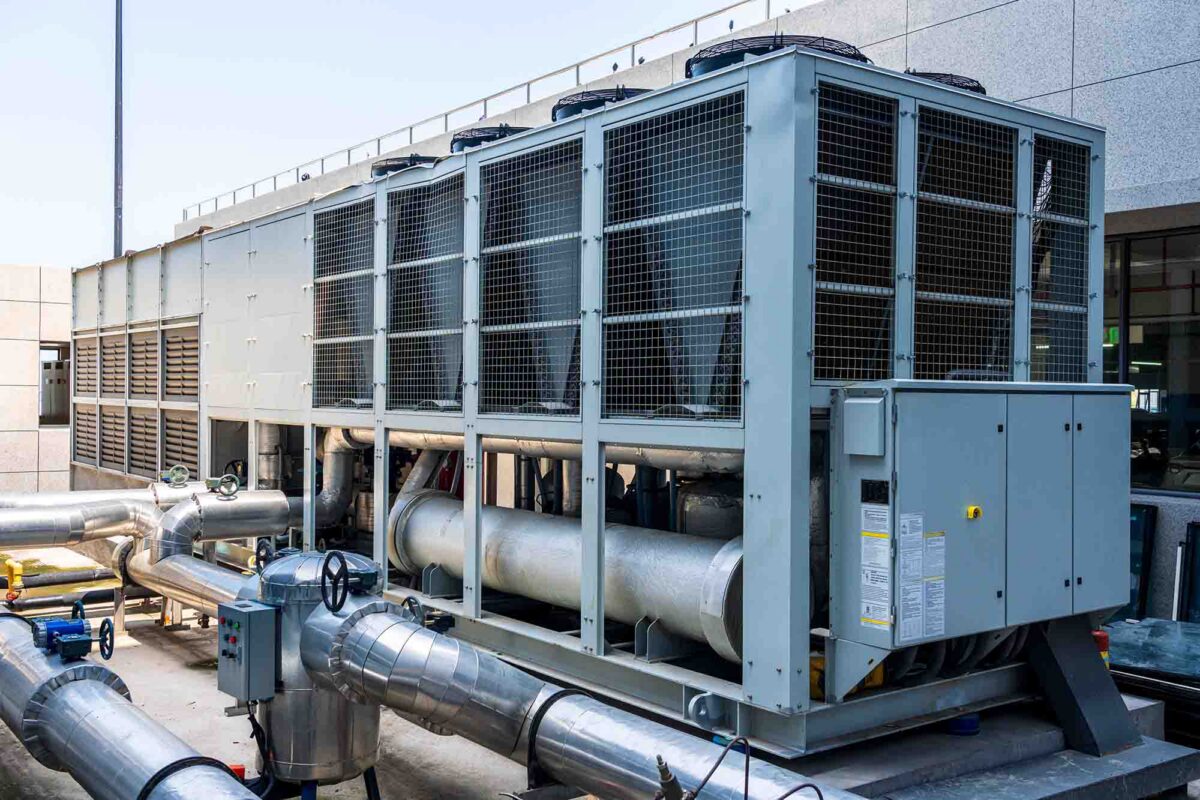
Energy recovery, in simple terms, is the process of capturing energy that would otherwise be wasted and putting it back to work. In HVAC and industrial systems, that lost energy takes on several forms.
Heat can leave through exhaust air, fluid systems shed excess pressure, and moving equipment might release kinetic energy as it slows down. Recovering some of that energy can reduce the demand for heating, cooling, and power systems while lowering long-term energy costs.
For HVAC applications, Coilmaster’s heat recovery solutions are built around your specific airflow, temperature, space, and performance requirements.
Energy Recovery’s Relevance
Buildings and industrial facilities reject usable energy every day; warm exhaust air leaves through ventilation systems, while manufacturing processes discharge hot gases and motors release energy during deceleration.
Energy recovery systems capture losses before they leave the process. In HVAC equipment, recovered thermal energy can preheat or precool incoming outdoor air, minimizing the heating or cooling demands of the primary system. Heat recovery ventilators transfer heat between outgoing and incoming air, while energy recovery ventilators transfer both heat and moisture.
Industrial applications recover energy from process exhaust, hot water, flue gas, wastewater, and other waste streams.
Basic Principles of Energy Recovery
Every energy recovery application should start with two questions: Where exactly is energy being lost, and could another part of the system use it?
Naturally, thermal energy moves from warmer mediums to cooler ones. Heat exchangers use that temperature difference to transfer heat without mixing the two streams.
Other systems convert energy into different forms. A regenerative drive, for example, converts kinetic energy from decelerating machinery into electrical energy. Pressure exchangers can transfer hydraulic pressure from one fluid stream to another.
Real-world performance is ultimately decided by factors like pressure drop, fan or pump power, heat-transfer limits, equipment efficiency, and operating conditions.
Energy Recovery Technologies
Generally speaking, energy recovery technology falls into three categories.
Thermal recovery captures heat from the air, water, exhaust, or other industrial processes. Typical technologies are coils, heat exchangers, heat pipes, runaround loops, heat pumps, and energy recovery wheels.
Mechanical and hydraulic recovery captures energy from movement or pressure; regenerative drives, hydraulic turbines, and pressure exchangers are all common examples. Electrical recovery converts otherwise wasted energy into electricity, seen with regenerative braking. Waste heat-to-power systems also convert industrial heat into electrical energy.
To find the best approach, you need to take the temperature, pressure, and consistency of the available energy source into account.
Heat Recovery: Coils, Heat Exchangers, and Heat Pumps
Heat recovery is frequently seen in HVAC systems. Air-handling units use coils or other exchangers to move energy between exhaust and incoming air streams, lowering the downstream heating or cooling loads.
Coil selection is completely shaped by the application. Engineers should always consider airflow, fluid conditions, entering and leaving temperatures, pressure drop, available space, materials, and required capacity. Recovery coils can be built around those conditions.
Runaround loops are especially practical when supply and exhaust air streams are physically separated. Heat pumps also make recovered heat more helpful by raising it to a higher temperature. When properly selected, heat exchangers and coils limit the new energy required for a building or process load.
Recuperation and Kinetic Energy
Recuperation refers to capturing energy during a process and putting it back to work. In an electric vehicle, the motor operates as a generator during deceleration. Instead of losing all the vehicle’s kinetic energy through friction brakes, it converts part of it into electrical energy.
The same idea applies to industrial equipment with frequent acceleration and braking cycles. Cranes, hoists, elevators, centrifuges, and conveyors can all use regenerative drives to return energy to a shared electrical system.
Pressure and Turbo Technologies for Energy Recovery
Pressure is another valuable energy source. In fluid systems, pressure exchangers can transfer pressure from a higher-pressure discharge stream to a lower-pressure incoming stream. These devices are frequently used in processes like reverse-osmosis desalination, where they reduce the load on high-pressure pumps.
Turbo technologies adhere to a similar principle. Expanders and electric turbo-compounding systems capture energy from pressurized or high-velocity gas streams then convert it into mechanical or electrical power.
Engineers should carefully assess systems where fluids are routinely throttled or depressurized, as those conditions can point to a recovery opportunity.
Heat Recovery in Buildings and Data Centers
Commercial buildings provide several practical heat recovery opportunities, particularly in ventilation systems. Heat recovery ventilators move thermal energy between outgoing indoor air and incoming outdoor air, and energy recovery ventilators can exchange moisture.
Data centers are another strong candidate, since servers create large, continuous heat loads. The U.S. Department of Energy recommends recovered data-center heat for applications such as ventilation-air preheating, water heating, and nearby building loads.
Retrofits rely on the existing ductwork, piping, heat exchangers, or heat pumps. Most of the time, new construction offers greater freedom to place heat sources and users close together.
Energy Efficiency and Cost Savings
Energy savings range with each application, so recovery effectiveness shouldn’t be seen as whole-building savings.
ASHRAE reports typical effectiveness ranging from around 40% to 90% for common air-to-air recovery technologies, depending on the equipment and conditions. The U.S. Department of Energy has also cited heat recovery ventilation systems can recover up to 80% of heat energy that would otherwise exit with exhaust air.
When calculating the ROI, account for:
- Annual energy recovered
- Utility rates
- Installed equipment cost
- Fan, pump, or auxiliary power
- Maintenance costs
- Equipment life
- Annual net savings
Simple payback can be determined by dividing the installed project cost by the annual savings. Lifecycle cost analysis paints a fuller picture by including maintenance, replacement, and long-term operating expenses.
Integrating Energy Recovery Technology into Existing Systems
Document the airflow, fluid flow, temperature, humidity, and pressure, as well as operating schedules and seasonal loads. Then, pinpoint where the energy is being rejected and whether another part of the facility could use it instead.
Physical constraints are a crucial consideration, so assess the available space, ductwork, piping routes, drainage, pressure drop, fouling risk, and service access before selecting equipment.
Custom heat exchangers and coils are sized around your conditions. Coilmaster’s EZCoil® software can streamline coil selection and specification, while VirtuaLab® resources can be used to evaluate performance before production. Factory testing can also confirm that equipment meets project requirements before installation.
Measuring with Key Performance Indicators
After startup, energy recovery projects must be measured. Track these KPIs:
- Energy recovered in Btu or kWh
- Entering and leaving temperatures
- Airflow or fluid flow
- Pressure drop
- Fan and pump energy
- Recovery effectiveness
- Avoided heating or cooling energy
- Energy cost savings
- System runtime
Metering needs to capture conditions on both sides of the recovery device. Depending on the system, that could include temperature sensors, flow meters, pressure sensors, electrical submeters, or building automation data.
You should track performance more frequently during commissioning, then move to monthly or quarterly reporting once the system is stable.
Let’s Get to Work
Begin by auditing where your facility rejects usable heat, pressure, or kinetic energy. It helps to cast a wide net, as exhaust air, process heat, wastewater, flue gas, braking equipment, and pressurized fluid streams are all potential candidates.
Next, compare each energy source to the nearby loads. The strongest opportunities combine a predictable energy source with a consistent use for the recovered energy, so long as the operating hours overlap.
For HVAC and industrial heat recovery applications, Coilmaster develops custom coils around airflow, temperature, fluid, dimensional, and performance needs. Review Coilmaster’s heat recovery solutions or request a quote to discuss your requirements.