
Why Condenser Coils Matter
Condenser coils are a critical component in any HVAC system, responsible for rejecting heat absorbed during the cooling process. After heat is removed from indoor air by the evaporator, the condenser coil transfers that heat to the surrounding environment, allowing the refrigerant to condense and continue circulating through the system. Components such as evaporator coils and condenser coils work together to maintain consistent system performance and reliable cooling.
The choice of condenser coil directly affects efficiency, operating pressure, and long-term system reliability. A properly selected coil supports stable heat transfer, reduces energy consumption, and helps prevent unnecessary strain on compressors and other system components. In both comfort cooling and industrial applications, condenser coil design plays a key role in overall system performance.
Air Cooled Condenser Coils
Air-cooled condenser coils use ambient air to remove heat from refrigerant as it flows through the coil. These systems rely on either natural convection or forced air to move air across the coil surface, although most commercial applications use forced air with fans to maintain consistent performance.
In forced air systems, a condenser fan pulls or pushes air across the coil, improving heat transfer and allowing the system to operate efficiently under varying load conditions. Fan selection is critical, as airflow rate, static pressure, and energy use all impact overall performance. Proper fan sizing ensures that the coil can reject heat effectively without increasing operating costs.
Air-cooled condenser coils are commonly used in rooftop units, packaged air conditioning systems, and process chillers. In these applications, the coil is typically located in the outdoor unit, where airflow can be maintained across the coil fins and tubing. These systems are widely used in commercial HVAC and industrial cooling due to their relatively simple installation and lack of water requirements.
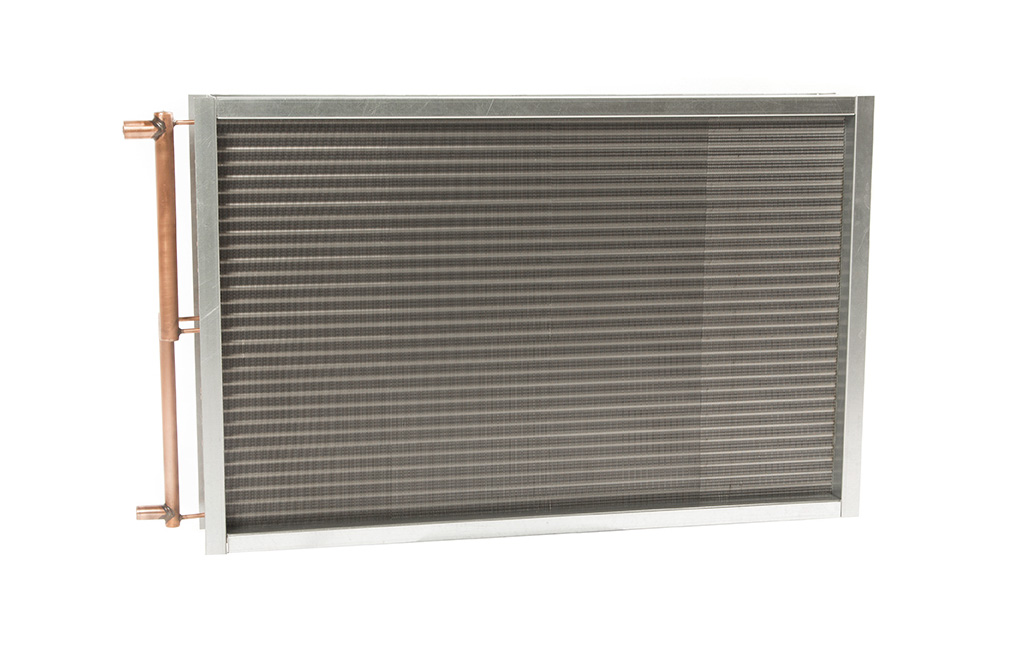
Coil construction typically uses copper tubing and aluminum fins arranged as a finned tube heat exchanger. Fin spacing, coil depth, and airflow path design all influence heat transfer performance. If airflow is restricted by debris or dirty coils, system efficiency drops, and cooling capacity is reduced.
Air-cooled systems are often selected when water is not available or when maintenance requirements must be minimized. In some applications, they are used alongside fluid coolers to support different heat rejection strategies within the same facility.
Water Cooled Condenser Coils
Water-cooled condenser coils are typically used in larger HVAC systems where higher efficiency and tighter temperature control are required. These systems transfer heat from the refrigerant into water, which is then circulated to a cooling tower or central plant system where the heat is rejected to the atmosphere.
One of the main advantages of water-cooled systems is their ability to operate at lower condensing temperatures compared to air-cooled designs. Lower condensing temperatures reduce compressor workload and improve overall system efficiency. This makes water-cooled condenser coils a preferred option for large commercial buildings, data centers, and industrial facilities.
Water-cooled systems are commonly used in central chiller plants and large-scale cooling systems. Construction may include tube bundle or tube heat exchanger designs, depending on system capacity and requirements. Materials such as copper or corrosion-resistant alloys are often selected to handle water exposure and maintain durability.
Despite their efficiency benefits, water-cooled systems require additional maintenance and infrastructure. Water treatment is necessary to prevent scaling, fouling, and biological growth within the system. Without proper maintenance, performance can decline over time. These systems also require pumps, piping, and cooling towers, which increase installation complexity and cost.
Enhanced Surface Coils and High Efficiency Designs
Modern condenser coil designs focus on improving heat transfer efficiency while reducing size and material usage. Enhanced surface technologies allow coils to achieve the same capacity with less surface area, improving overall system efficiency.
Advanced fin designs, including louvered fins and optimized fin spacing, increase turbulence at the air surface, which improves heat transfer without significantly increasing pressure drop. Microchannel coil designs use flat tubes and multiple small flow passages to improve refrigerant distribution and reduce refrigerant charge.
These high-efficiency designs are particularly useful in applications where space is limited or where energy performance targets must be met. By improving heat transfer, enhanced coils reduce the energy required for airflow and support better system performance. This allows engineers to design more compact systems without sacrificing cooling capacity.
Selecting the Right Coil Type
Selecting the correct condenser coil requires evaluating multiple factors related to system performance and operating conditions. Climate plays a major role, as high ambient temperatures can reduce the effectiveness of air-cooled systems, while water-cooled systems may offer more stable performance in these environments.
Space constraints also influence coil selection. Air-cooled systems typically require larger coil surface areas, while water-cooled systems may reduce footprint but require additional equipment such as cooling towers. Maintenance access is another key consideration, as coils must be accessible for cleaning and inspection to maintain performance.
Acoustic requirements can affect fan selection, particularly in commercial environments where noise levels must be controlled. Performance goals must also be balanced with capital cost. While water-cooled systems may offer higher efficiency, they involve higher upfront costs and additional infrastructure. Air-cooled systems offer simpler installation but may have higher operating costs depending on conditions.
Defining energy targets and long-term operating expectations helps guide coil selection and ensures the system meets both performance and cost objectives.
Maintenance and Long-Term Performance
Maintaining condenser coil performance is essential for long-term efficiency and reliability. Over time, dirt, debris, and environmental contaminants can accumulate on coil surfaces, reducing airflow and limiting heat transfer.
Routine cleaning and inspection are necessary to maintain performance. Coil washes help remove buildup and restore airflow across the coil surface. In environments with high exposure to contaminants, protective coatings can be applied to reduce corrosion and extend coil life.
Material selection also plays a role in durability. Copper and aluminum are commonly used for heat transfer, while coatings can help protect against harsh environments. In cases where performance declines significantly, coil replacement may be required to restore system capacity and efficiency. Proper maintenance planning helps delay replacement and reduce overall lifecycle costs.
Typical Applications
Condenser coil selection directly impacts system performance across a range of industries. In data center cooling applications, efficient heat rejection is critical for maintaining uptime and managing high heat loads. The choice of condenser coil affects both energy consumption and system reliability.
In healthcare facilities, condenser coils support HVAC systems that require precise temperature control and consistent indoor air quality. Reliable performance is essential to maintain safe operating conditions.
In industrial process cooling, condenser coil design influences production efficiency and system stability. Selecting the appropriate coil type ensures that heat is removed effectively and that the system can operate continuously without interruption. Integration with components such as evaporator coils and other heat exchangers helps maintain balanced system performance.
Get Help Selecting the Right Condenser Coil
Selecting the right condenser coil is essential for achieving reliable performance, energy efficiency, and long-term system durability. Coilmaster designs and manufactures custom condenser coils engineered to meet the specific requirements of each application. Whether you are evaluating condenser coil types for a new system or upgrading existing equipment, our team can help guide the process.
Learn more about Coilmaster condenser coils and explore solutions built for performance and durability or contact our team to discuss your application and request a quote.